The Moth Diaries: Just Another Young Adult Vampire Movie?
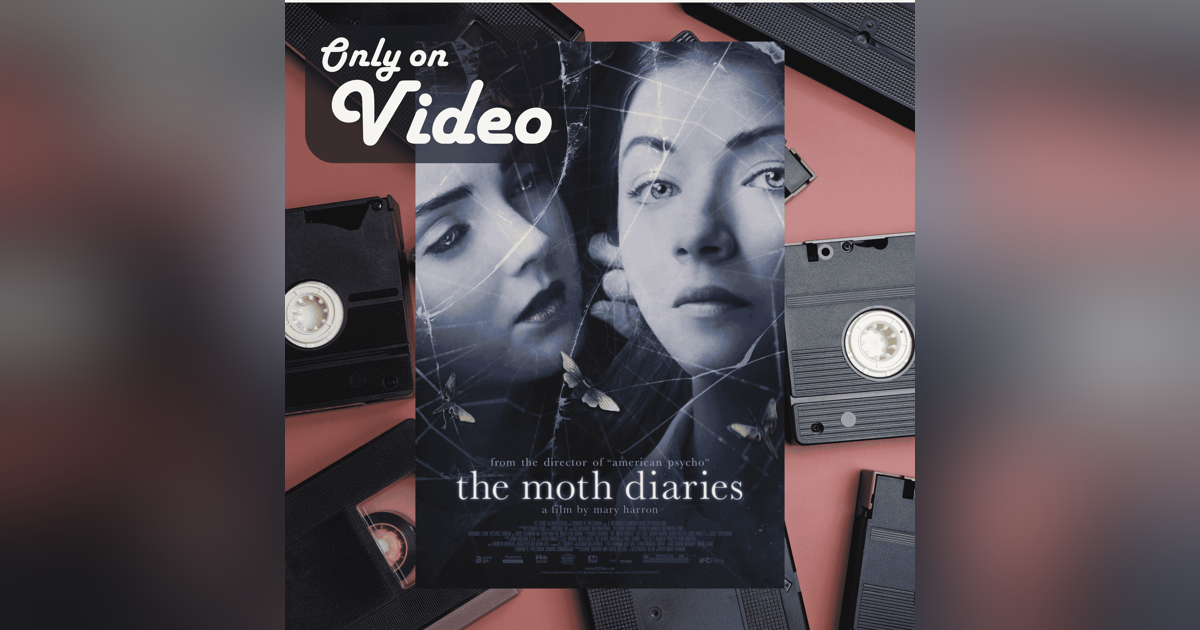
In Episode 4 of Only On Video, I cover Mary Harron’s 2011 gothic horror film The Moth Diaries—a psychological vampire story set at an elite girls’ boarding school. It never reached the cult status of American Psycho or I Shot Andy Warhol, and for me it’s one of Harron’s weaker features, but it’s still an interesting pivot: a director known for satire and biographical outsiders testing her themes inside supernatural fiction.
My main takeaway: the ideas are solid—grief, isolation, identity, adolescent intensity—but the execution often feels half-baked: heavy-handed foreshadowing, flat dialogue, and an anticlimactic ending that doesn’t earn the emotional payoff it’s reaching for.
What This Episode Covers
Context: Release, Reception, and the 2011 Vampire Hangover
- Premiered at the Venice International Film Festival (September 2011), then a quiet limited release
- Low commercial impact (roughly $400K worldwide) and harsh critical response
- Why it was a tough moment for vampire films: post-Twilight expectations, mainstream “romantic” vampire energy, and Harron going quieter and stranger instead
Genre and Historical DNA
- Set in the early 2000s but built from 19th-century gothic foundations (Carmilla, Dracula)
- Adapted from Rachel Klein’s 2002 novel, originally framed as an anonymous diarist’s account
- The film’s core move: vampire mythology as metaphor—less lore, more emotional parasite
Director Context: Harron Without Turner
- Harron’s fourth feature and her first screenplay written entirely solo (no Guinevere Turner)
- A deliberate pivot away from satire/biopic into internal, psychological genre storytelling
- A career “experiment” that hints at later work where she handles psychological material more effectively
Cast & Crew Breakdown
Behind the Camera
- Written and directed by Mary Harron, adapted from Rachel Klein
- Cinematography (Declan Quinn): desaturated, early-2010s grey-blue atmosphere that adds mood but also dates the film
- Score (Lesley Barber): one of the stronger elements—minimalist unease plus female indie pop that tracks Rebecca’s emotional shift
In Front of the Camera
- Sarah Bolger as Rebecca (the diarist / narrator): sympathetic but underwritten; more reactive than driving
- Lily Cole as Ernessa: eerie and mannequin-like in a way that works for the role; one of the brighter spots
- Sarah Gadon as Lucy: the most natural performer, but the story loses her too early to carry the emotional weight
- Scott Speedman as Mr. Davies: the “cool teacher” who turns predatory; effectively repulsive and thematically on-point
- Judy Parfitt as Miss Rood: reliable grounding presence as headmistress
Story Highlights (Spoilers)
Act I: Innocence and Foreshadowing
- Rebecca returns to school after witnessing her father’s suicide (graphic, immediate darkness)
- Ernessa arrives: pale, quiet, menacing—telegraphed as the center of gravity from her first scene
- Mr. Davies frames the text: “Sex, blood, and death” as the vampire story trifecta (the movie is not subtle about what’s coming)
Act II: Obsession and Isolation
- Lucy drifts toward Ernessa; Rebecca spirals into jealousy, grief, paranoia
- Gothic imagery escalates: moths, dust, antique room details, disappearances, mysterious death
- Rebecca’s diary fragments; visions blur; it’s unclear what’s supernatural and what’s psychological
- Suicide ideation threads through the story (razor blade motif)
Act III: Death and Release
- Lucy weakens, is hospitalized, then dies off-screen (emotionally underplayed)
- Rebecca finds and burns Ernessa’s coffin; the climax arrives abruptly, without a full confrontation
- Ernessa appears one last time; Rebecca drops the razor blade—symbolic release from the spiral
The Ambiguity Problem
The movie aims for “real and metaphorical” ambiguity (vampire as grief/depression/desire), but unlike American Psycho, the uncertainty here tends to feel confusing rather than enriching—especially because the school’s emotional reactions to death feel strangely muted.
Trivia and Interesting Bits
- In the novel, the narrator’s name is never revealed; she’s simply “the diarist.” Harron names her Rebecca, grounding the story more concretely (and possibly nodding to the gothic jealousy of Rebecca)
- Harron said she hadn’t seen Twilight during production, despite inevitable comparisons
- Harron described Ernessa as “both real and metaphorical”—a psychological parasite more than a traditional monster
- Style inspiration: 1970s European gothic horror (mood over jump scares), though the approach doesn’t land as effectively here
Highs and Lows
Highlights
- Vampire-as-metaphor: grief, loneliness, and adolescent jealousy externalized rather than lore-driven
- Psychological, non-romantic approach: isolation as the horror, not “sexy vampire” fantasy
- The setting works: gothic school atmosphere with modern teen touches (Rock Band, dorm-room rebellion)
- As a season entry, it shows Harron’s willingness to stretch into new genres even when the result is uneven
Lowlights
- Predictable plotting and overbearing foreshadowing that drains tension
- Flat dialogue and limited chemistry between key relationships (Rebecca/Ernessa/Lucy)
- Rebecca is too passive and thinly defined for the breakdown to hit emotionally
- Low-budget effects and the washed-out palette create a made-for-TV feel
- Rushed, anticlimactic ending with little emotional payoff
Legacy
- A commercial and critical misfire that disappeared quickly from the 2010s horror conversation
- Still useful as a Harron “bridge” film: an experiment in supernatural metaphor that foreshadows later psychological, adaptation-driven work
- Not a top-tier Harron entry, but it reinforces her long-running interest in female identity, repression, and emotional power dynamics—just in a genre wrapper that doesn’t fully cooperate
What’s Next
Next episode: Daliland—from gothic girlhood to surreal celebrity in the world of Salvador Dalí.
Subscribe, leave a review, and share Only On Video with the film geeks in your life.
Listen to more episodes at https://onlyonvideo.com