American Psycho: Mary Harron's Misunderstood Masterpiece
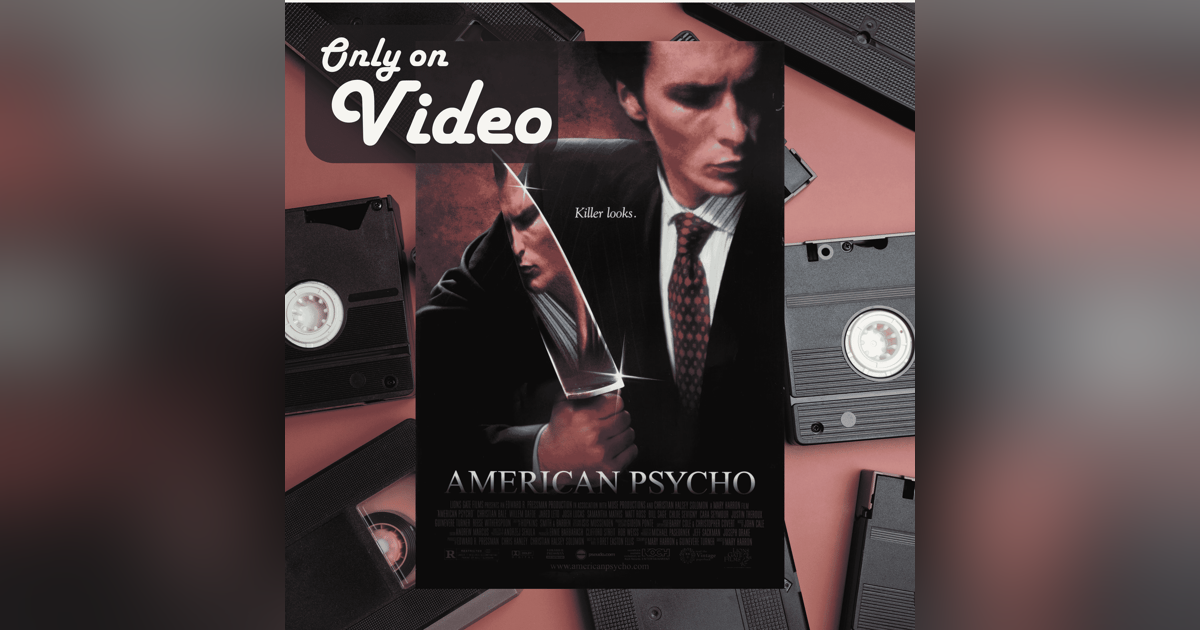
In Episode 2 of Only On Video, I dig into Mary Harron’s most famous film: American Psycho. This is one of my all-time favorites—not because it’s “fun,” but because it’s brutally precise: it’s a horror film, a pitch-black comedy, and a cultural critique masquerading as a slasher...
And it’s still being argued about 25 years later.
You start in a recognizable world of 1980s Wall Street excess, then you realize you’re trapped inside Patrick Bateman’s performance of humanity. By the end, you’re left with a question the film refuses to settle: did any of this happen, and does it even matter if it didn’t?
In This Episode
Context: Release, Era, and Why It Hit
- Premiered at Sundance (January 2000), theatrical release (April 2000), and why early reviews were mixed
- Set in 1987 Manhattan at peak Reagan-era yuppie greed, but released at the tail end of the 1990s boom
- How the film became a cult object: business cards, Huey Lewis, skincare routine, “videotapes”
- Why the satire still lands—and why it’s also frequently misunderstood
From Bret Easton Ellis Novel to Harron’s Film
- The book’s notoriety and cultural controversy
- How Harron and co-writer Guinevere Turner made a version that’s not “violence as entertainment”
- Why implication, aftermath, and ambiguity are the point
- How the movie blends genres (satire, horror, thriller, fever dream) and why that’s both its strength and a barrier for some viewers
Director’s Context: The Casting Battle and the Movie We Almost Got
- Harron’s insistence on Christian Bale before he was a household name
- The studio’s push for Leonardo DiCaprio and the brief “what if” of Oliver Stone directing
- Why getting Harron back in the chair mattered for the film’s tone and meaning
Why This Film Matters to Me
- The movie that helped me see film as literature
- Rewatchability: even after multiple viewings, small details keep deepening the world
- The feeling it leaves you with: “Wait… what just happened?” as the movie shifts from literal to metaphor
Cast & Crew Breakdown
Behind the Camera
- Mary Harron’s second feature and a major leap in confidence, budget, and cultural volatility
- Guinevere Turner’s co-writing and the film’s sharp grasp of gender, power, and image
- Cinematography by Andrzej Sekuła (Reservoir Dogs, Pulp Fiction) and how this New York feels bigger and more alive than I Shot Andy Warhol
- John Cale’s score versus the aggressively bright pop needle drops (Huey Lewis, Whitney Houston, Phil Collins) that turn Bateman’s monologues into satire
In Front of the Camera
- Christian Bale as Patrick Bateman: meticulous, terrifying, funny, and deeply performative
- Willem Dafoe as Detective Kimball: the perfect unreadable foil
- Reese Witherspoon as Evelyn: vapid image management as a mirror of Bateman
- Jared Leto as Paul Allen: envy made flesh, and an easy target for Bateman’s status panic
- Theroux/Lucas/Ross as the blur of interchangeable suits (intentional, but still one of my only “meh” spots)
Story Highlights (Spoilers)
Spoiler section covers:
- Bateman’s morning routine as a thesis statement: control, curation, no “real” self
- The social ecosystem: reservations, coke bathrooms, and identity confusion
- The business card showdown as high-stakes status theater
- The Huey Lewis monologue into the axe murder: the film locking its tone into place
- Escalation: violence, paranoia, and the film’s slide toward cartoonish breakdown (naked chainsaw chase, police shootout fantasy)
- The voicemail confession, the erased consequences, and the final “THIS IS NOT AN EXIT” trapdoor ending
Trivia and Interesting Bits
- Bale’s Bateman was inspired by a Tom Cruise interview: intensely friendly, “nothing behind the eyes”
- In the novel, Tom Cruise is literally Bateman’s neighbor (the film drops this, but keeps the influence)
- Bale’s commitment: stayed in Bateman’s American accent off-set; cast/crew reportedly didn’t hear his real voice until the wrap party
- Dafoe’s interrogation scenes were shot three ways (suspects him / doesn’t / neutral) and edited together beat-by-beat to keep you off balance
- Despite a modest budget (around $7 million), a large portion reportedly went to music licensing—and the movie uses those songs as story structure, not background
Highs and Lows
Lowlights
- Bateman’s coworkers are intentionally flat and interchangeable, which supports the satire but reduces contrast in the surrounding world
- Genre fluidity (satire/horror/thriller) is genius but also why some viewers bounce off it
- The ending’s ambiguity can feel “too smart” or emotionally unrelieving if you came for a conventional horror payoff
- A lingering question the film provokes: is anyone good here, or is the point that this class ecosystem has hollowed out everyone?
Highlights
- Bale’s performance: the definitive version of Bateman as both literal monster and symbol of class cruelty
- The sound/music design: Cale’s cold score colliding with candy-coated pop
- The iconic set pieces that became cultural shorthand (business cards, Huey Lewis, chainsaw chase, “videotapes”)
- Strong implied violence and aftermath that lets your imagination do the worst work
- The slow reveal: not a single twist, but a creeping doubt that never resolves cleanly
Legacy
- One of the sharpest cinematic portraits of 1980s corporate excess, but framed as horror rather than swagger
- The role that rewrote Christian Bale’s career and previewed his extreme commitment
- A massive pop-culture footprint, including the uncomfortable reality that the film is sometimes idolized by the people it’s mocking
- The movie that cemented Mary Harron’s voice: reframing a supposedly “unfilmable” novel into a satire that dissects Bateman rather than glamorizing him
- A needless sequel footnote: American Psycho 2 (2002), with no meaningful connection to Harron or the original story
Next Up
Next episode: The Notorious Bettie Page—pinup icon, fame, and a very different kind of cultural collision.
If you’re enjoying Only On Video, follow the show, leave a rating and review, and share it with someone who still quotes the business card scene without knowing why it’s funny.
Listen to more episodes at https://onlyonvideo.com